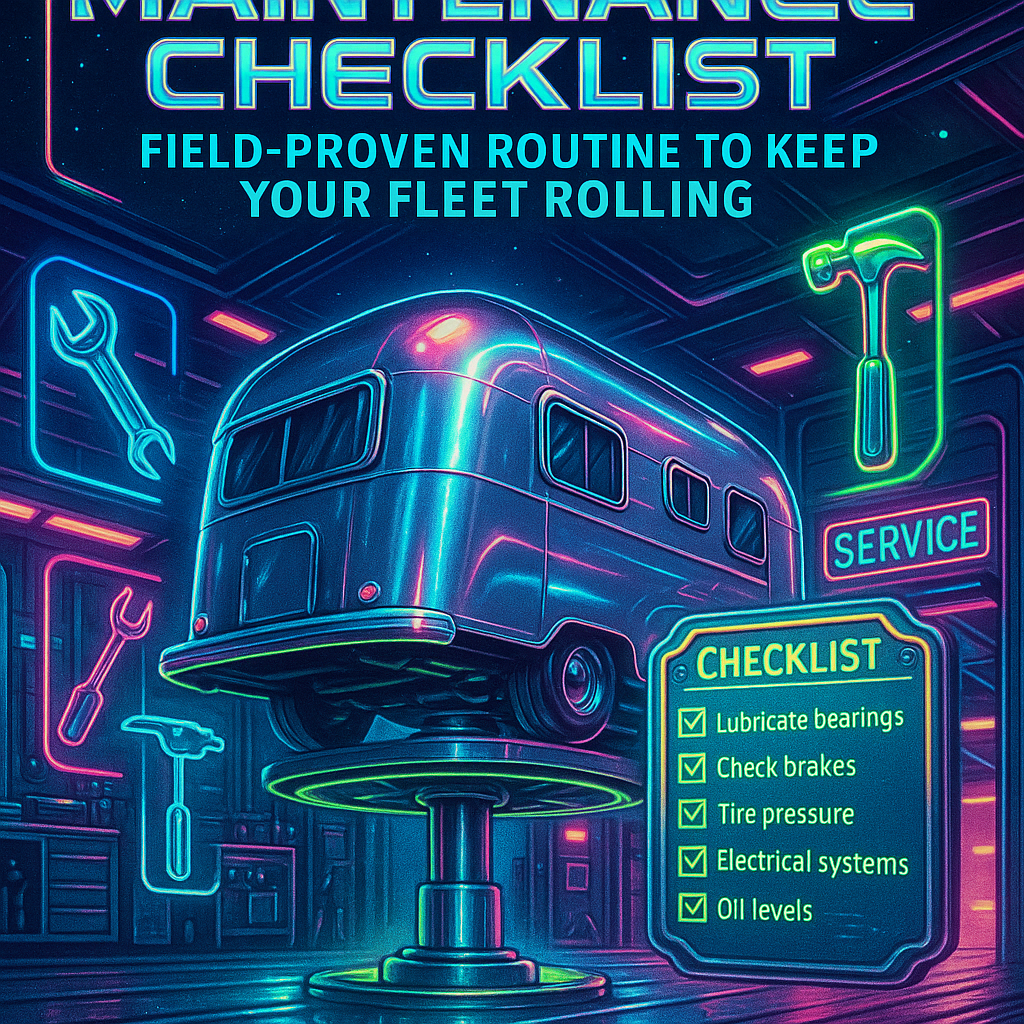
Trailer Maintenance Checklist: Field-Proven Routine to Keep Your Fleet Rolling
I learned the hard way that a trailer stopped on the shoulder costs more than time. One cold morning, a trailer that looked fine had a broken hub bearing four hours into a job. We lost the day, a delivery window, and a customer’s trust. That single failure forced a change: a simple trailer maintenance checklist that fits into a crew’s rhythm and keeps trailers working when money’s on the line.
The problem is not that parts fail. Parts fail. The problem is we let small risks become crippling events. This article walks through a practical trailer maintenance checklist and how to use it on the job so you spend less time fixing and more time hauling.
Start-of-day checks that take five minutes and prevent hours of downtime
Begin every shift with a quick walk-around. This first 100 words include the primary keyword so it’s front and center: trailer maintenance checklist.
Look and listen. Check tires for cuts or sidewall bulges. Confirm air pressure visually and with a gauge when possible. Walk the length of the trailer to spot loose or hanging wiring, damaged lights, or uneven loads.
Open doors and secure latches. A single unsecured door can destroy a load and an axle. Test lights from the cab and have a partner walk the perimeter when possible.
Check coupling points. Ensure the hitch, safety chains, and breakaway cable are in place and show no heavy wear. A quick tug on the tongue and chains tells you if hardware is loose or degrading.
Weekly items that catch wear before it becomes failure
Set a weekly slot for the items you do not need to check every morning. These tasks take more time but reduce catastrophic surprises.
Inspect wheel bearings and hubs. Listen for roughness and check for play by lifting the wheel and rocking it. Grease where required and note any heat discoloration on hubs after a run.
Assess the suspension. Look for cracked or sagging springs, cracked hangers, or loose U-bolts. Pay attention to uneven tire wear. It often means alignment or suspension issues that get worse quickly.
Test braking systems. For electric brakes, verify shoes aren’t glazed and wiring is intact. For hydraulic systems, check lines, reservoirs, and fluid level. A soft pedal or delayed response needs immediate attention.
Monthly inspections that protect the trailer’s long-term value
Once a month, put the trailer on jack stands and do a thorough look. This is when you find corrosion, hidden cracks, and mounting failures.
Examine frame and welds. Surface rust is normal, but look for fatigue cracks around high-stress points like crossmembers and tongue mounts. Small cracks grow fast under load.
Check electrical connectors and splice points. Moisture intrusion is the most common killer of trailer wiring. Clean, seal, and replace corroded pins. Confirm ground paths are secure.
Review the load-securing gear. Chains, straps, binders, and winches take abuse. Replace anything with damaged stitching, welded cracks, or compromised ratchets.
How to build this checklist into your crew’s routine so it actually gets done
A checklist that sits in a folder does no work. The trick is integration and accountability.
Assign responsibility. Name a person for the start-of-day check and another for the weekly slot. Rotate to keep eyes fresh, but keep ownership clear.
Keep a simple log. Record date, trailer ID, mileage, checks done, and any parts replaced. A quick pen-and-paper sheet taped to the trailer works. The point is repeatability and a record you can review.
Train on failure signs, not just procedures. Teach crews how a bearing sounds before it fails. Let them feel what a loose U-bolt looks like. Practical familiarity beats rote lists.
Small investments that pay off: parts, procedures, and people
Spend on quality consumables that reduce repeat work. Use the right grease, robust electrical tape, and sealed connectors. Replace cheap straps before they fail under load.
Standardize procedures across trailers. When each unit follows the same checklist, swapping crews or drivers becomes seamless. Standard parts and mounting locations speed up roadside repairs.
Develop leadership that values prep over rescue. If a supervisor benchmarks uptime and not just completed jobs, crews learn to choose the preventive check that saves a day.
If you want guidance on building crew habits and accountability around checks, resources on practical operational leadership can help. For focused reading on the human side of running reliable field operations, review material on leadership that translates directly to small crews and heavy equipment management (www.jeffreyrobertson.com).
Closing insight: make the checklist a habit, not a task
Failures are inevitable. Repeated failures are avoidable. The real value of a trailer maintenance checklist shows up not in one perfect inspection but in the discipline of doing the same sensible things every time.
Start simple: five-minute walk-arounds, a weekly deeper look, and a monthly teardown. Assign owners, keep a log, and train crews to notice the sounds and signs of trouble. Over time you will see fewer roadside failures, more predictable maintenance costs, and trailers that reliably do the job.
Do the small stuff well, and the big jobs follow. The morning you save with a quick check will be the morning you would have otherwise sat on the shoulder waiting for a tow.