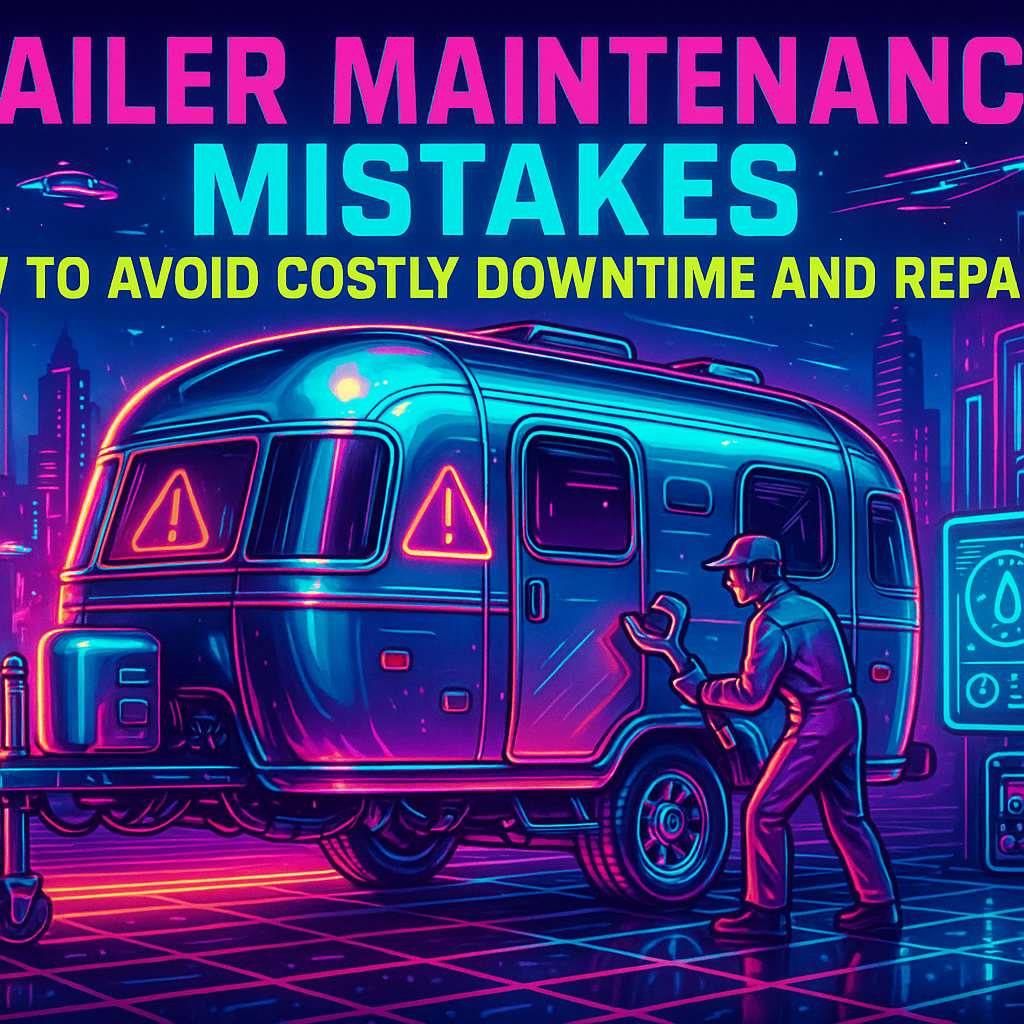
Trailer Maintenance Mistakes: How to Avoid Costly Downtime and Repairs
I was on a jobsite when a simple trailer issue turned an eight-hour shift into a two-day scramble. The trailer’s lights failed, the bearings overheated, and we discovered a rusted frame bolt that had been silently failing for months. Those three small failures added up to lost time and profit. Knowing the most common trailer maintenance mistakes and how to fix them keeps you on the road and on schedule.
Why ignoring trailer maintenance costs more than money
Trailer problems rarely happen in isolation. A worn tire can change handling and damage a rim. A loose coupler can strain the tongue and the welds that hold it. Small issues compound under load and distance. That means the real cost of neglect is downtime, safety risk, and the reputation hit when a client’s project is delayed.
Early detection and routine checks prevent that chain reaction. The primary keyword here is trailer maintenance mistakes because most of what follows comes from real repairs and prevention strategies I learned running fleets and fixing trailers in the field.
Routine inspections that save you time and money
Perform a quick pre-trip inspection every time the trailer leaves the yard. Walk around, check tires, lights, coupler, safety chains, and load tie-downs. Spend five minutes more and you save hours later.
Tires: Look for uneven wear, cuts, and correct pressure. Underinflation eats tread and overheats the tire under load. Replace tires in matched sets when wear is significant.
Lights and wiring: Loose or corroded connectors are the silent failure that causes roadside stops. Clean connectors with a brush and dielectric grease. Replace frayed wiring before it short circuits.
Hitch and coupler: Check that the coupler locks solidly on the ball and that the latch and safety pin function. A coupler that wiggles transfers shock to the tongue, risking cracks and broken welds.
Bearings and brakes: Heat and load expose worn bearings. Spin the wheel and listen for grinding. If brakes are hydraulic or electric, test their response under a light roll. Addressing these before a trip prevents wheel failure and adds hours of uptime.
Fixing common faults before they become emergencies
Small maintenance windows let you fix problems on your schedule, not the roadside. Create a short checklist your crew follows after every job.
Lubrication: Grease fittings and moving parts regularly. Bearings, pivot points on ramps, and coupler mechanisms eat grease under load. A dry bearing overheats fast.
Fasteners and welds: Vibrations loosen bolts. Torque the axle U-bolts to spec and inspect welds for hairline cracks. If you find a crack, don’t patch it with a bolt alone. Schedule a proper repair.
Load distribution: Know your trailer’s tongue weight and distribute cargo to avoid overloading axles. Poor load balance increases braking distance and accelerates tire wear. Measure and adjust before long hauls.
Smarter maintenance planning for busy operations
Reactive repairs cost more because you pay emergency rates and lose productive hours. Set a maintenance cadence based on miles and hours.
Daily quick checks, weekly deeper inspections, and quarterly service windows work for most small fleets. Track repairs and recurring issues to spot patterns—repeated bearing failures on one axle point to alignment or loading problems, not just bad bearings.
Document everything. A simple log that notes dates, parts replaced, and who inspected the trailer helps when you sell equipment or when warranty questions arise. Use plain language; clarity beats fancy formats.
Training crews to catch problems early
Mechanics are not the only ones who should notice wear. Drivers and loaders are your first line of defense. Teach crews what to look for and give them permission to stop a job for safety concerns.
Hands-on demonstrations work best. Show how to check bearings, how a cracked weld looks, and the difference between normal tire wear and a cupped pattern that signals suspension issues. When everyone knows the signs, you catch problems sooner.
If you want an example of how clear, grounded guidance can shape an operation’s culture, study how practical management and on-the-ground decision-making intersect with simple practices like cross-checking tasks and accountability in the field. A short—yet focused—primer on leadership can help supervisors enforce standards and build consistency across crews. Visit www.jeffreyrobertson.com for practical frameworks on on-site leadership.
Closing insight: maintenance is an operational discipline
Treating trailer care like a discipline changes outcomes. Routine inspections, small planned repairs, and simple training stop most failures before they start. Every hour you invest in checks and documentation pays back in reduced downtime and safer, more reliable work.
You do not need fancy software or a full-time shop to keep trailers working. Start with a concise checklist, a visible log, and a short training session. Those three moves reduce the most common trailer maintenance mistakes and keep your operation moving on schedule and on budget.