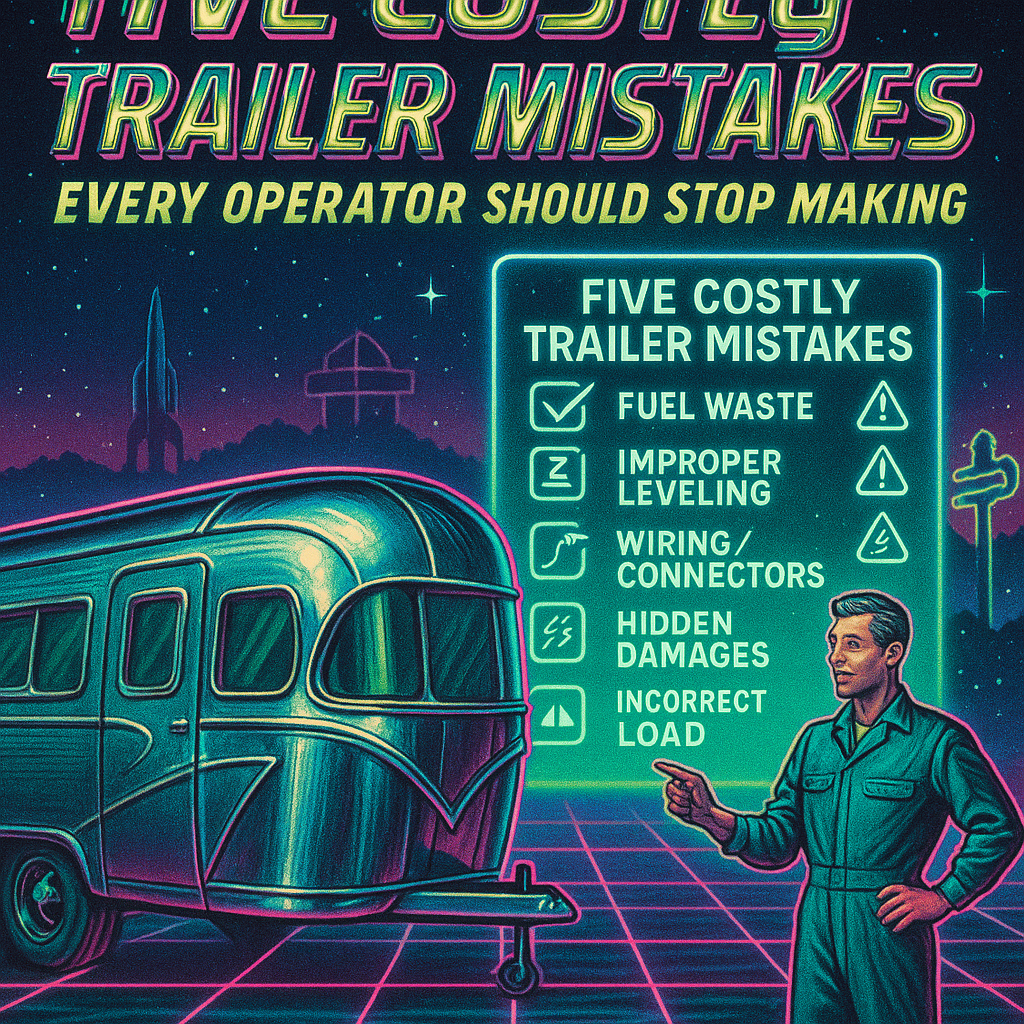
Five Costly Trailer Mistakes Every Operator Should Stop Making
Two summers ago I watched a crew tow a loaded equipment trailer down a county road while the right rear tire shredded. The trailer drifted, the driver fought the wheel, and a day’s work vanished into a long delay and a hefty repair bill. That sequence — bad planning, ignored maintenance, and rushed fixes — is the origin of too many avoidable losses. In this piece I’ll walk through the most common costly trailer mistakes I see and what crews can do differently tomorrow.
Mistake 1 — Skipping basic pre-trip inspections
You know the feeling of getting behind schedule. That’s when inspections get abbreviated or skipped. The result is missed signs: a cracked lug, frayed wiring, a tire losing pressure. Small failures compound quickly once you’re on the road.
Start each day with a short, consistent pre-trip checklist. Check tire pressure and condition, lug nut torque, lights and wiring, hitch pin engagement, and safety chains. Make it a two-minute habit for every trailer, every trip. When something is off, mark the trailer out of service until it’s fixed. That simple discipline removes most roadside breakdowns.
Quick inspection routine (two minutes)
- Walk one full circuit around the trailer.
- Check tires for cuts, bulges, or nails and verify pressure.
- Test all lights and the breakaway system.
- Confirm coupler engagement, safety chains, and load securement.
Those four steps catch 80 percent of failures I’ve seen in the field.
Mistake 2 — Ignoring the weight and balance math
Operators often guess payloads. They pile gear in the back or fail to account for tongue weight. An overloaded or poorly balanced trailer changes steering, braking, and tire wear. It also risks spreading axles or bending frames under concentrated loads.
Use a scale or visit a public weigh station to verify gross vehicle weight and tongue weight when cargo changes. Aim for the manufacturer’s tongue-weight recommendation, usually 10 to 15 percent of the trailer weight for conventional trailers. If you can’t weigh, treat heavy items as if they matter: distribute weight evenly, place denser items low and over the axle, and keep the center of gravity forward of the axle line when possible.
Mistake 3 — Treating wiring and lights as optional maintenance
Broken or intermittent lighting might look like an annoyance until you get ticketed or hit the back of another vehicle. Corroded connectors and chafed wiring are endemic on trailers because wires get tugged and exposed to salt and mud.
Clean and protect connectors with dielectric grease. Route wires through protective conduit where they’re exposed to abrasion. Replace cheap plugs and sockets with heavy-duty marine-grade connectors if your trailers work in wet or salty environments. Make light checks part of the pre-trip routine so faults are caught before dusk.
Mistake 4 — Deferring bearing, brake, and suspension care
Bearings overheating, brakes seizing, and suspension wear don’t announce themselves in polite ways. They fail under load, and failures usually happen in the worst possible place and time.
Regimen matters: inspect wheel bearings, repack or replace as recommended, and check brake adjustment regularly. Replace worn suspension components before they tear a leaf spring or collapse an axle. Keep a maintenance log for each trailer. A simple date-and-odometer entry prevents assumptions and builds a reliable history you can act on.
Mistake 5 — Poor leadership and inconsistent practices on the crew
Even with the right parts and schedules, inconsistent execution kills uptime. Too often a single experienced person knows the real routines and when they retire or get busy, standards slip. Strong, consistent leadership creates reliable habits and reduces mistakes across the crew.
Good leadership builds repeatable processes. Teach a one-page inspection and maintenance routine to every driver. Run short toolbox talks that focus on one recurring failure you’ve seen. When a repair happens, document the cause and solution so the whole team learns. You can find structured guidance on building durable operational habits under the topic of "leadership" at www.jeffreyrobertson.com — it’s a useful reference for turning informal know-how into standard practice.
Closing: small investments that prevent big losses
Most costly trailer mistakes share the same root: skip the small, pay for the big. A two-minute inspection, regular weight checks, protected wiring, scheduled bearing and brake service, and consistent on-the-ground leadership keep trailers reliable and crews productive.
Adopt these habits and you reduce roadside repairs, lower insurance claims, and protect profitable hours. The equipment itself is simple. The challenge is discipline. If you fix the human and process problems first, the mechanical problems get far easier to manage. Finish today’s route with a five-minute log entry and you’ve already made tomorrow safer and cheaper.