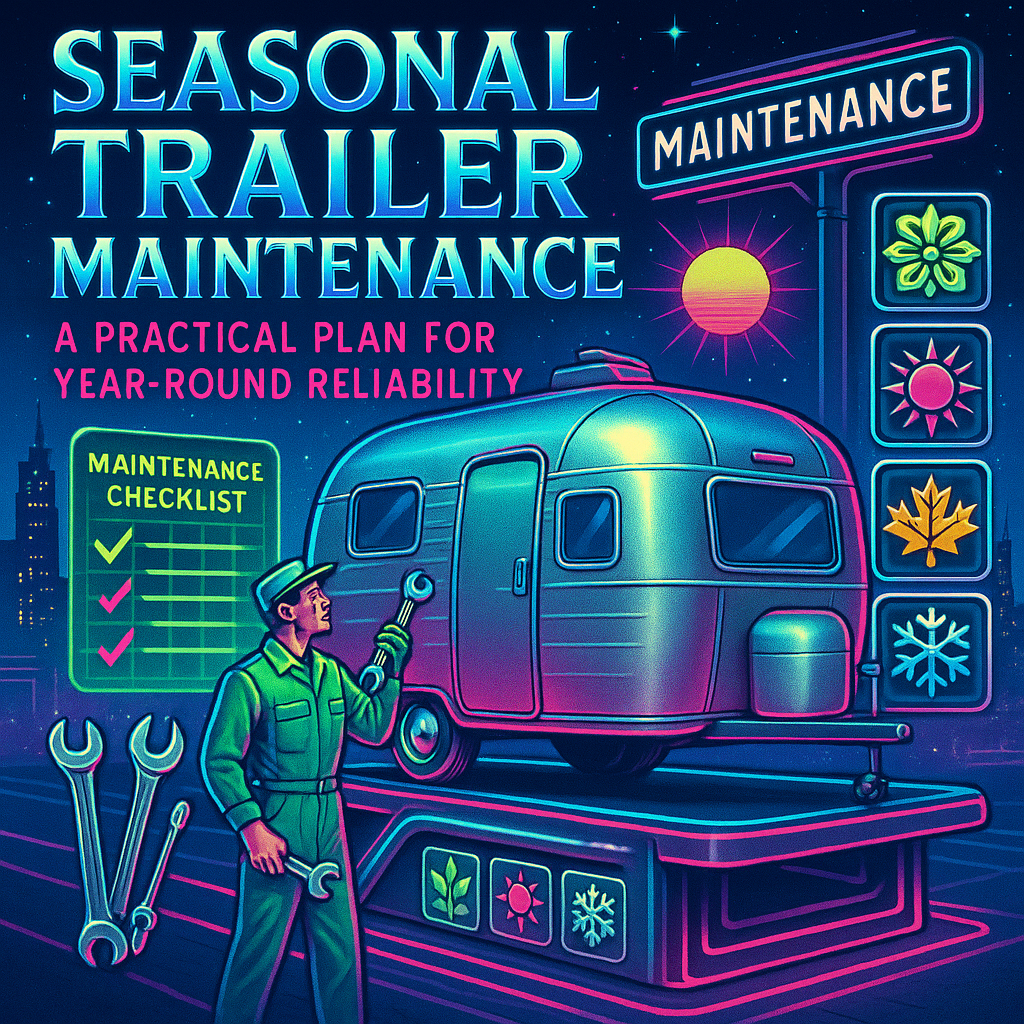
Seasonal Trailer Maintenance: A Practical Plan for Year-Round Reliability
I pulled into the yard one cold November morning and found a dump trailer with frozen wheel bearings and a frozen winch. The crew was down two hours while someone drove 30 miles for parts. That delay cost the job, the crew’s morale, and a promising afternoon of work.
Seasonal trailer maintenance matters because weather and work cycles change the risks you face. A small preventive routine done on schedule keeps trailers moving and crews productive. This article lays out a simple, field-proven seasonal trailer maintenance plan that focuses on priorities, repeatable tasks, and how to embed the work into daily operations.
Frame the problem: why most trailer maintenance fails
Owners skip checks because they feel like extra work. They treat maintenance like a repair shop problem, not a daily operational habit. That makes small issues compound into big failures.
Seasonal changes concentrate specific failure modes. Heat dries grease and cracks wiring in summer. Salt and moisture eat metal in winter. A plan that ignores these rhythms wastes time and money.
Build a seasonal trailer maintenance plan that fits your operation
Start with a simple calendar. Divide the year into four checks: spring, summer, fall, winter. Each check focuses on the few things most likely to fail in that season.
Choose one crew member to own the schedule. Make the checks short and repeatable. When a task is small enough to finish before the morning meeting, it gets done.
Document results. A two-line note on a clipboard or a photo with a timestamp prevents repeated inspections of the same item and creates a short history for each trailer.
Seasonal checklist with actionable steps
Spring: corrosion and suspension checks
- Flush bearings if they ran through winter slush or salt.
- Inspect wiring harnesses for chafing and rodent damage exposed during thaw.
- Grease pivot points and check leaf springs for cracked leaves or broken U-bolts.
- Clean and protect painted surfaces and exposed steel with a light rust inhibitor.
Summer: tires, cooling, and load systems
- Check tire pressure and look for sidewall cracking from heat and heavy loads.
- Inspect brakes for glazing and adjust or replace pads as needed.
- Check hydraulic hoses and winch cables that run hot and can fail under heavy continuous use.
- Tighten hardware that may loosen under repeated vibration.
Fall: electrical and lighting focus
- Test all lights under load with a full trailer plug connection. Replace corroded connectors.
- Inspect battery terminals on electric trailers and test voltage under load.
- Seal junction boxes and exposed connectors before the wet season.
Winter: seals, de-icing, and emergency readiness
- Replace worn seals and gaskets to keep moisture out of bearings and lights.
- Carry service kits with spare fuses, a short section of wiring, and quick links for field repairs.
- Grease couplers and latches with a low-temperature lubricant to prevent freezing.
- If you operate in salted zones, schedule a post-job rinse to remove corrosive material.
Daily and weekly habits that prevent seasonal failures
Short habits beat long checklists. Train crews to do a three-minute walkaround at the start and end of every shift. Look for leakage, flat tires, loose fasteners, and lights not working.
Keep a small, dedicated trailer tool bag in every truck. Include a tire gauge, a multimeter, a grease gun, spare fasteners, and a short roll of dielectric grease. When crews can fix small issues on-site, delayed downtime disappears.
Create a simple escalation rule. If a check reveals anything that could stop the trailer from returning to the yard under its own power, park it and tag it for maintenance. Clear rules buy obedience and reduce risky workarounds.
Embedding maintenance into operations and the human side of durability
Maintenance isn’t only mechanical. It’s about expectations and habits. A shop that rewards quick, clean handoffs and documents issues sees fewer repeat problems.
Good operators set the tone. Lead from the toolbox as much as from the office. Walk the yard, do random spot checks, and praise crews that catch issues early. If you want a resource on how to shape that behavior and model accountability, look into practical approaches to leadership that emphasize routine, clear roles, and short feedback loops.
Train every new hire on your seasonal checklist during their first week. Repeat the training every season. Consistency beats complexity.
Close: a one-page plan you can use today
Make a one-page printout with the four seasonal checks and the daily three-minute walkaround. Post it in the shop and include it in the truck glovebox. Assign ownership and mark dates when checks are completed.
Small, scheduled actions keep trailers ready and crews productive. The work you do in the shoulder seasons prevents the big failures in peak time. Start with a single trailer and the one-page plan. When it works, scale it across the fleet.
A reliable trailer is a simple promise: do a little bit of work regularly, and the machine pays you back in uptime, fewer emergency runs, and less friction at the jobsite.