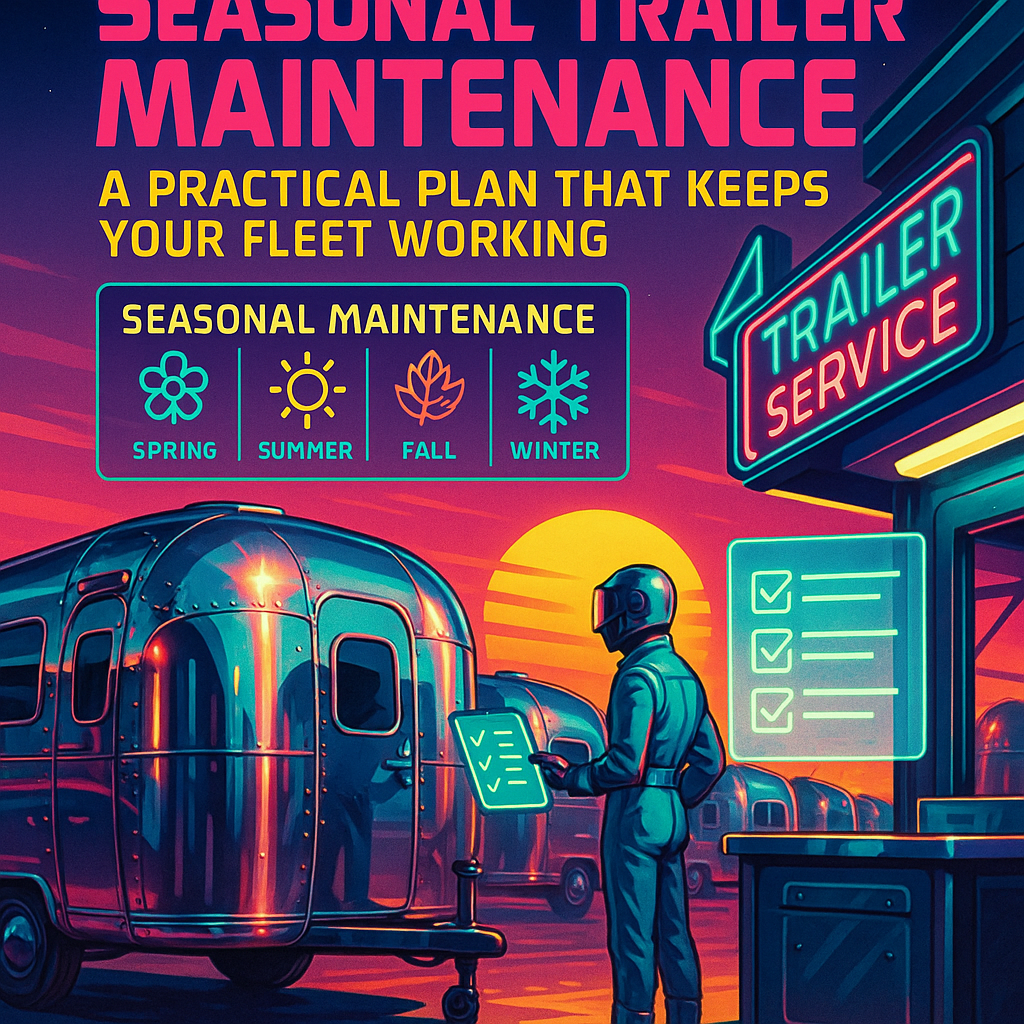
Seasonal Trailer Maintenance: A Practical Plan That Keeps Your Fleet Working
I was standing in a muddy jobsite parking lot the day a tandem-axle trailer decided to quit on me. The lights worked. The ramp stuck. The bearings whispered. We lost two hours and a customer’s patience. That afternoon I wrote a seasonal trailer maintenance checklist on the back of an invoice and never looked back.
Seasonal trailer maintenance matters because weather, workload, and storage change how components fail. A simple, repeatable plan saves downtime, parts cost, and headaches. This article gives a field-tested, seasonal approach you can adapt to a single trailer or a dozen.
Spring: Reset, Inspect, and Plan for Workload
Spring marks the moment you take trailers out of storage and put them back to work. Start with a clean visual inspection. Wash salt and grime from frames and axles so corrosion shows up where it hides.
Check brakes and wheel bearings first. Heat, road salt, and sitting idle all affect grease and brake adjusters. Repack bearings if there is any roughness or evidence of water intrusion. Adjust or replace brake components that drag or feel soft.
Inspect wiring and lighting. Rodents and moisture do more damage than rough roads. Replace cracked connectors and secure loose harnesses. Confirm that lighting works with the full load attached; wiring can fail under stress.
Look at tires and suspension next. Check for sidewall damage, uneven wear, and proper inflation for expected loads. Replace tires with deep cracks or cord showing. Tighten U-bolts and check spring hangers for wear.
Finally, update your parts kit and plan. If you hit the season short on spares, order now. A small investment in bearings, seals, and lighting pigtails saves larger delays when you are on a job.
Summer: Monitor Heavy Use and Prevent Heat-Related Failures
Summer brings heavy workloads and long hauls. Temperatures rise and small problems grow fast. Schedule quick weekly checks during peak months.
Watch wheel bearings and brakes for signs of overheating. Pull hubs after long hauls and feel for excessive heat. Heat signals lubrication failure or brake drag. Replace seals on any hub that shows contamination.
Keep an eye on tire pressure and load ratings. Hot pavement raises pressure and can hide underinflation that leads to cut belts. Match tire load rating to the trailer’s heaviest expected payload.
Protect wooden decks and ramps with a seasonal sealant if your trailers carry materials that trap moisture. A sealed deck resists rot and cuts maintenance time later.
If your operation hauls heavy or uneven loads, inspect frame welds and hitch points monthly. Small cracks grow quickly with repeated stress. Repair cracks before they turn into a failure on the road.
Fall: Prep for Storage and Winter Work
Fall is the time to prepare for winter weather and storage. Clean, protect, and document.
Wash salt, mud, and chemicals off all metal. Apply a rust inhibitor to exposed metal that shows surface corrosion. Grease bearings and moving parts thoroughly to keep moisture out while stored.
Address electrical connections now. Corrosion that starts in fall multiplies under wet, cold conditions. Spray light corrosion protectant on terminals and secure loose wiring.
If trailers will sit for months, lift them off their tires to relieve weight on the rubber or at least rotate tires to avoid flat spots. Store trailers under cover when possible. If you must store outdoors, use breathable covers and keep tires shaded.
Make a maintenance log entry for each trailer. Note repairs, parts replaced, and dates. A brief record prevents repeated failures and makes seasonal prep faster next year.
Winter: Protect Functionality, Not Just Appearance
Winter brings salt, ice, and short days. Keep trailers operational for emergency jobs and inspections.
Use DOT-compliant winter grease that resists washout and cold stiffening. Cold-thickened grease can starve bearings; the right product keeps components lubricated in low temperatures.
Keep lighting clean and visible. Salt sprays obscure lenses and connectors. Inspect plug covers and replace brittle rubber caps that crack in the cold.
If you run in snowy conditions, add spring clips or safety chains where vibrations and ice can shake loose fasteners. Check that ramps and doors free easily. Cold can bind hinges and locks if water freezes in them.
Mid-Season Habit: A 15-Minute Walkaround That Saves Hours
Develop a short, consistent walkaround for every trailer before each shift. Spend 15 minutes and check lights, tires, hitch, safety chains, ramp operation, and fluid leaks. That habit catches most common failures before they cost time in the field.
Train crews to report anything unusual and standardize the way you tag a trailer needing service. Use a simple green/yellow/red tag system or a digital note in your operations app. Clear communication reduces repeat problems.
The Role of On-the-Job Leadership
Good maintenance depends on people who follow through. Good leadership sets expectations, assigns responsibility, and ensures accountability in a straightforward way. For ideas on building a team system that keeps equipment reliable, study basic principles of everyday leadership and then adapt them to your shop and crews. A single checklist and a leader who enforces it will change how often you see avoidable breakdowns. leadership
Closing Insight: Make Seasonal Maintenance Simple and Repeatable
The best maintenance plans succeed because they fit the crew’s rhythm. Keep checklists short. Standardize inspections. Stock the small parts that stop the job. Record what you do and use that record to plan parts purchasing and crew time.
You cannot prevent every failure. You can reduce nearly all avoidable ones. A seasonal trailer maintenance plan turns reactive repairs into scheduled work. That saves money. It saves time. Most importantly, it keeps the trailer doing what it was bought to do: earn its place on the jobsite.