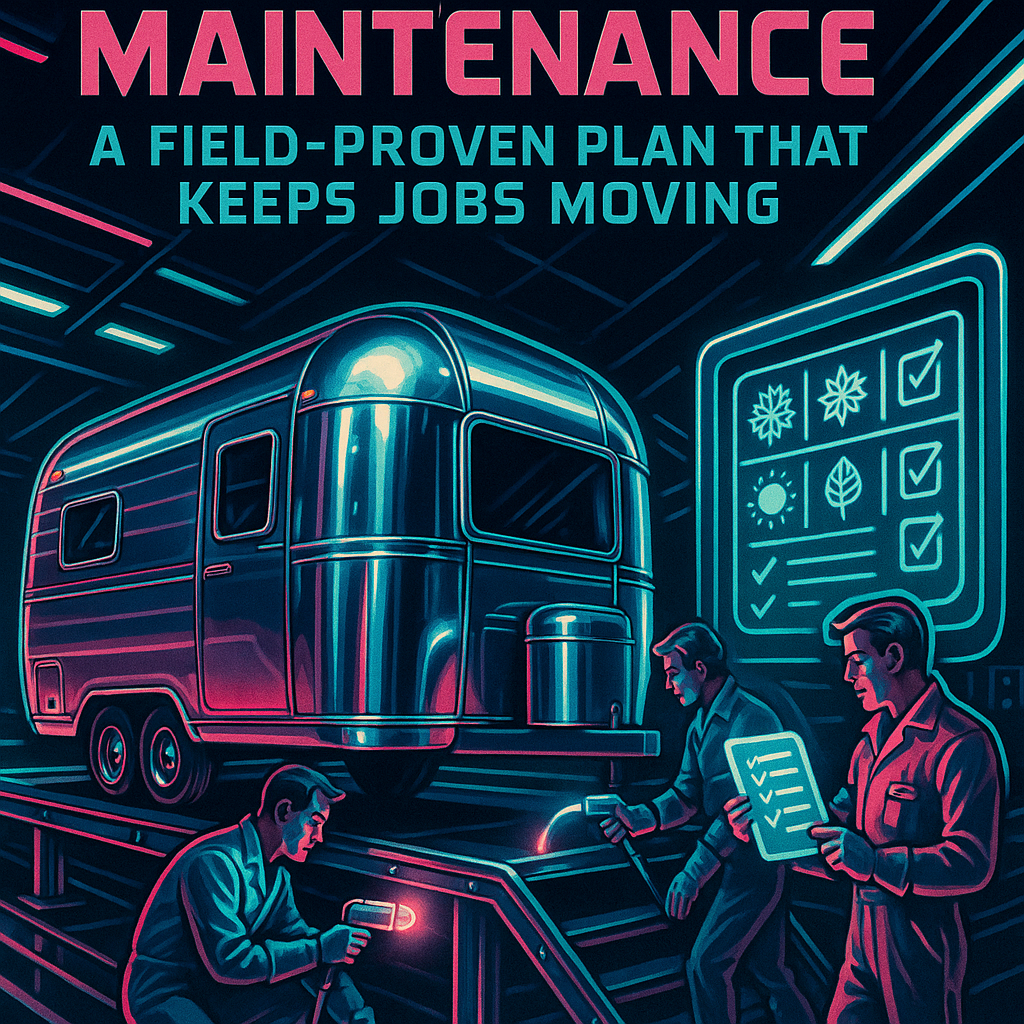
Seasonal Trailer Maintenance: A Field-Proven Plan That Keeps Jobs Moving
I found the problem on a Monday morning at first light. A utility trailer sat stranded on a jobsite because a neglected hub had locked up overnight. The crew lost a day. The client lost trust. That single failure cost more than the repair. It cost momentum.
Seasonal trailer maintenance matters because the calendar changes the work you do and the way your equipment reacts. A short, repeatable plan tailored to spring, summer, fall, and winter keeps trailers reliable and reduces emergency downtime.
Why a seasonal trailer maintenance plan beats reactive repairs
Trailers live outside. They face heat, cold, dust, salt, and mud. Those elements attack different systems at different times of year. Tires and bearings wear differently in summer heat than in winter salt. Electrical issues show up after long wet seasons. If you wait for failure you pay labor, lost time, and rushed parts costs.
A seasonal trailer maintenance plan shifts your work from crisis to prevention. It makes small, regular investments that keep assets earning rather than waiting for repair.
Spring prep: inspections, fluids, and corrosion control
Start each busy season with a full walkaround. Look beyond obvious dents. Check axle alignment visually. Shake suspension components. Listen for looseness.
Inspect hubs and bearings. Grease behaves differently after a cold winter. Replace seals that show age and repack bearings if they are serviceable. If you run sealed bearings, make sure the hub assemblies are dry and free of grit.
Address electrical connectors. Corrosion builds inside plugs during damp months. Clean contacts and apply dielectric grease. Replace brittle wiring before it fails. Test lights under load so you know the harness carries power, not just the bulb.
Check the coupler, safety chains, and breakaway system. These items take abuse at low speeds and during winter shuttles. Replace worn links and stretch chains. A loose coupler costs you control and safety.
Summer upkeep: cooling, tires, and load discipline
Heat raises tire pressure and accelerates rubber wear. Inspect tire sidewalls for cracking and uneven wear. Measure tread depth. Rotate or replace tires before they become a liability.
Monitor hub temperatures on longer hauls. An operator can use a non-contact thermometer to spot overheating hubs before they seize. A 25-degree rise over ambient signals trouble.
Mind payload and loading patterns. Heat magnifies the consequences of overloading. Keep loads balanced and secure. Shifting load can hide damage until it becomes a failure on the road.
Fall checks: brakes, bearings, and winter readiness
Autumn brings moisture and road treatments that accelerate corrosion. Fall is the time to service brakes. Adjust mechanical systems and inspect hydraulic lines for hardening. Replace pads or shoes with remaining thickness below spec.
Verify emergency braking systems. Breakaway batteries age faster in frequent stop-start use. Test the full system under simulated conditions. Don’t assume a light blink equals readiness.
Treat exposed metal. A thin coat of rust inhibiting spray on trailer frames and undercarriage slows corrosion. Focus on weld seams and fastener clusters where moisture collects.
Winter storage and cold-weather strategies
Cold changes lubricant viscosity. Use grease with a low-temperature rating for bearings and fittings. Switch to cold-weather hydraulic fluid where appropriate.
If you store trailers, clean them first. Salt and grime left on the frame accelerate corrosion during storage. Elevate stored trailers off the ground to keep tires from developing flat spots.
For active winter use, inspect suspension bushings and leaf packs. Bent or sagging leaves hide until you hit rough patches. Replace compromised parts before frozen potholes do the rest.
Practical daily habits that cut emergency calls
Make a brief pre-shift checklist part of every driver’s routine. A three-minute walkaround catches many developing issues. Check tire pressures, lights, coupler engagement, and visible leaks. Record findings in a simple log.
Train crews to report the smallest odd noises. An experienced operator recognizes a bearing hum or a slight scrape. Those early notes let you schedule a quick fix instead of a roadside tow.
Keep a small field kit with the trailer. Include spare bulbs, a basic wiring pigtail, a grease gun, a torque wrench, and a few common fasteners. Repairs that you can do on-site save a jobday.
When leadership matters on the yard and on the road
Maintenance does not succeed without consistent oversight. The problem was never the missing bolt. The problem was that nobody checked whether bolts stayed tight. Good operators set a standard and follow it.
Lead by setting expectations and by being visible during maintenance cycles. Put a simple escalation path in place so crews know who to call when they find a problem they cannot fix. That clarity prevents half-measures and delays.
If you want a short primer on building that culture, read about practical approaches to crew leadership and routines that reduce failure. The best examples focus on habits and accountability rather than complex policies. For one useful take on building effective on-the-ground leadership, see this resource on leadership (https://www.jeffreyrobertson.com).
Closing insight: treat seasons as a checklist, not a crisis
Seasonal trailer maintenance works because it turns the year into predictable checkpoints. You do smaller, targeted tasks when conditions change. You stop treating failure as surprising.
Start with a cadence you can sustain. Spring and fall deep checks, summer and winter targeted adjustments, and a daily three-minute walkaround will cut breakdowns and keep jobs moving. Momentum is the true asset for any trailer-dependent operation. Protect it with a plan and the discipline to follow it.
By planning around the seasons you keep trailers reliable, crews productive, and clients confident. That approach wins more days than any single repair ever will.