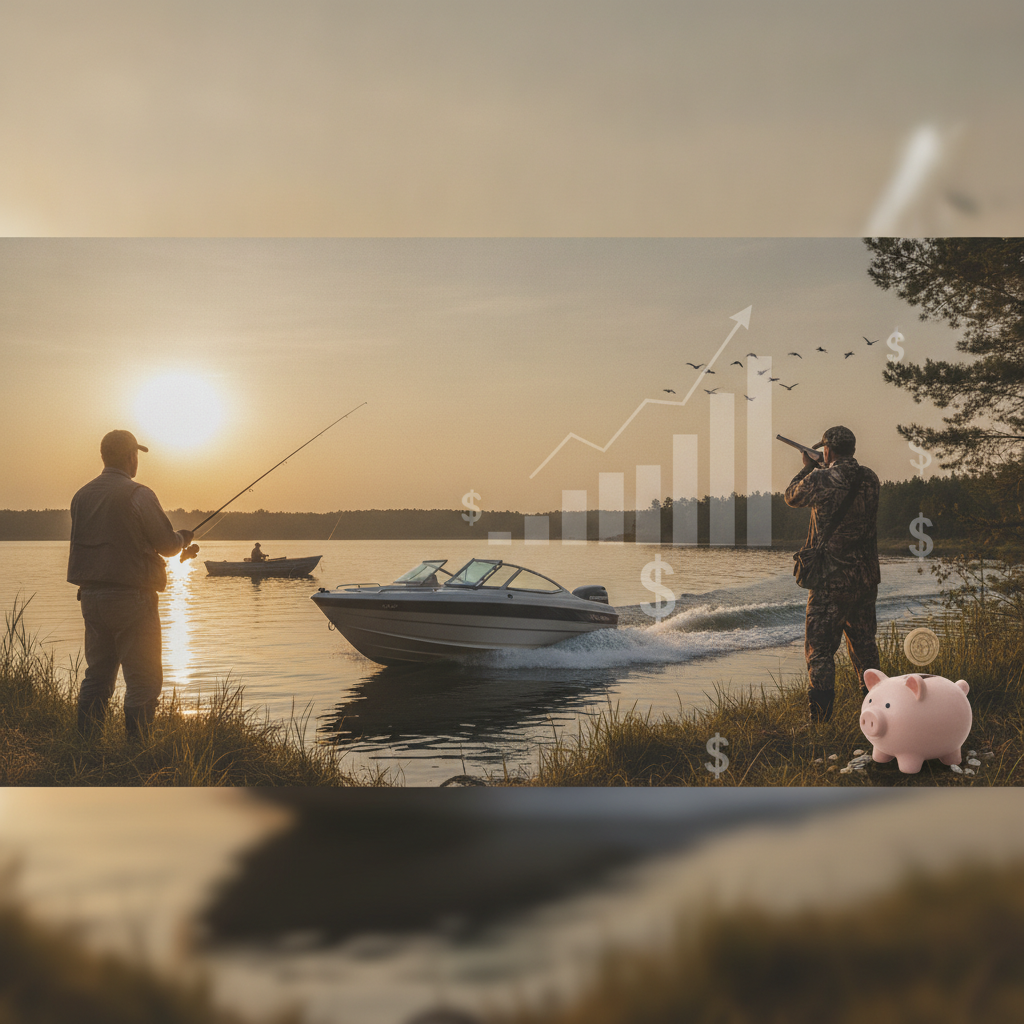
Even with a reported $936 million state surplus, lawmakers may still look to raise hunting, fishing and boating fees. The proposal under discussion would increase some charges by $5 to $20, a relatively modest change on paper but one that could still affect how residents and visitors spend on outdoor recreation.
The debate highlights a familiar tension in public finance: a large surplus does not automatically mean every program is fully funded, and it does not eliminate pressure on agencies that manage wildlife, waterways and recreation access. For businesses tied to the outdoor economy, the important question is not just whether the increases are small, but whether they change behavior at the margin.
Why Raise Fees When the State Has a Surplus
A state surplus often creates the impression that government has extra money available for every need. In practice, surpluses are usually tied to broader budget conditions and may be earmarked, temporary, or needed to cover other priorities. Fees for hunting, fishing and boating are often used to support specific services rather than the general state budget.
Those services can include habitat management, conservation enforcement, access maintenance, licensing systems and safety programs. If the cost of delivering those services rises, lawmakers may argue that modest user-fee increases are preferable to drawing down reserves or shifting the burden to taxpayers who do not use the programs.
There is also a policy argument that people who directly benefit from outdoor recreation should help pay for it. Under that view, a fee adjustment is not a punishment for participation, but a way to keep the system financially sustainable.
Small Increases Can Still Influence Spending Decisions
A $5 to $20 increase is not likely to stop committed hunters, anglers or boaters from using state resources. But in consumer behavior, the issue is often not the size of one fee in isolation. It is the total cost of participation, which can include licenses, permits, gear, fuel, travel, lodging, meals and access charges.
For a resident family, even a few extra dollars per license or registration can matter when stacked across multiple activities. For visitors, the added expense may influence whether they choose one destination over another, especially when neighboring states or private alternatives offer similar experiences at lower cost.
That is why modest fee changes can have a broader effect than they appear to at first glance. They do not necessarily reduce participation dramatically, but they can slightly reduce discretionary spending associated with trips, boat usage or repeat outings.
What Outdoor Businesses Should Watch
Businesses that rely on fishing, boating and hunting traffic should pay attention to how the fee changes are received by consumers. Outfitters, marinas, tackle shops, campgrounds, bait suppliers, guides and tourism operators all depend on steady participation in outdoor recreation.
There are several areas worth monitoring:
- Licensing activity: If more users delay purchases or reduce renewals, the total number of trips may soften.
- Boat usage: Higher registration or access costs could lead some owners to use boats less often.
- Fishing participation: Anglers may not quit, but they may trim frequency, travel shorter distances or spend less on extras.
- Tourism behavior: Out-of-state visitors may compare total trip costs more carefully and shift to competing destinations.
The concern is not necessarily a sudden drop in demand. It is that even small added costs can influence where and how often people spend money. In an industry built on frequent, repeat recreation, small changes can add up.
The Trade-Off Between Revenue and Participation
Lawmakers considering fee increases are essentially balancing two goals. They want to preserve or improve the funding that supports outdoor programs, while avoiding a level of cost that discourages use. That trade-off is especially sensitive in states that market themselves as destinations for hunting, fishing and boating.
If fees remain too low, agencies may struggle to maintain services or invest in access and conservation. If fees rise too quickly, the state risks creating friction for the very users those programs are meant to serve. The challenge is finding a level that supports operations without making recreation feel less accessible.
That balance matters because outdoor recreation is not only a policy issue; it is an economic one. When participation slows, even slightly, local businesses can feel the effect in fewer equipment purchases, shorter trips and lower seasonal spending.
A Modest Policy Change With Broader Implications
On its face, a $5 to $20 fee increase may look minor, especially in a state with a substantial surplus. But public budgets and consumer behavior do not always move in the same direction. State leaders may still see the increase as a practical way to support conservation and recreation programs, while residents and businesses may see it as one more cost layered onto an already expensive pastime.
The real question is whether the increase remains a small adjustment or becomes a signal that outdoor recreation is getting more expensive to participate in. If it is the latter, businesses linked to the industry will want to watch licensing trends, boating activity and tourism patterns closely in the months ahead.