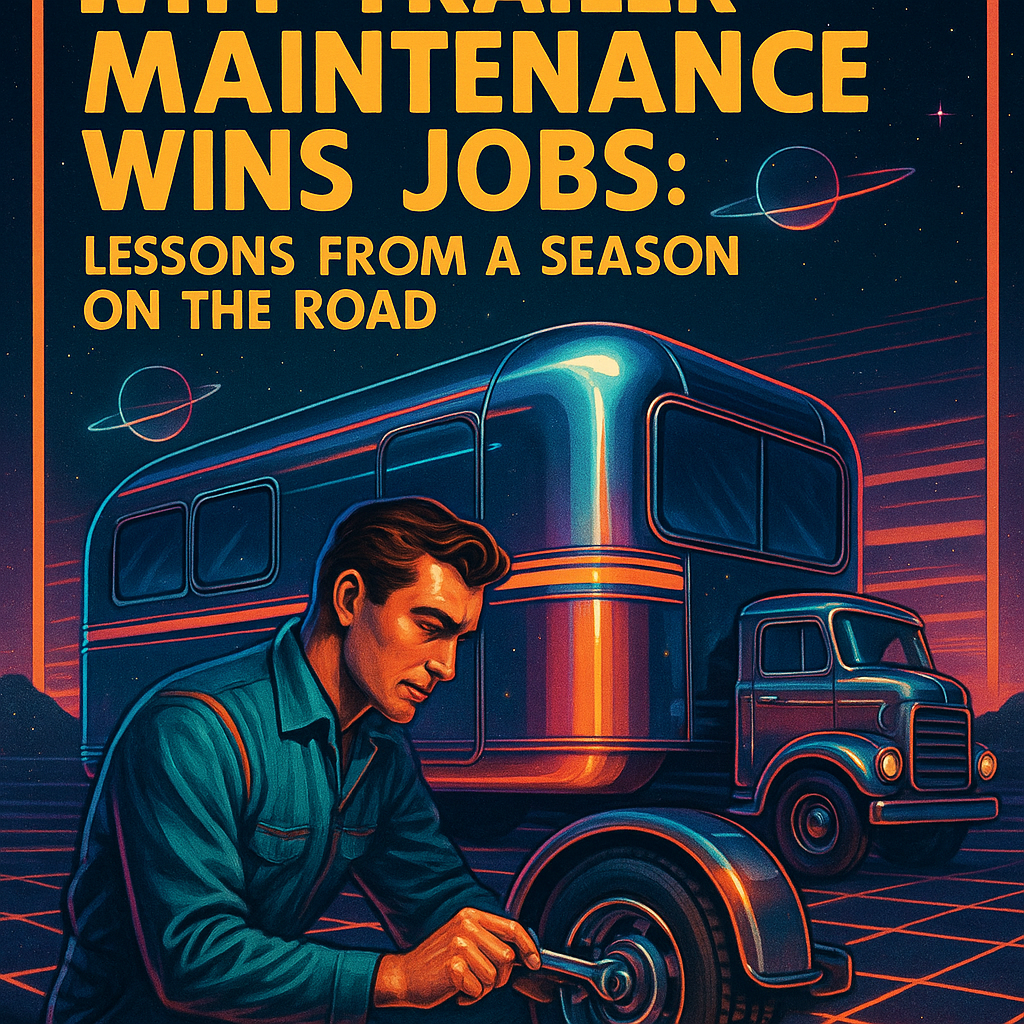
Why Trailer Maintenance Wins Jobs: Lessons from a Season on the Road
I spent a season running two tandem-axle trailers for a small excavation crew. The week before a big municipal job one trailer's wiring shorted and the lights went dark at 4 a.m. We lost the first slot on the schedule and spent a day waiting on parts. That one failure cost more than the part itself. It taught me that trailer maintenance is not something you do when you have time. It is the operational backbone of any trailer-dependent business.
Maintaining trailers keeps you on schedule. It keeps crews safe. It protects margins. Below I lay out the practical systems that kept us moving the rest of the season, with examples you can apply the next time you load up and roll.
Start with a simple, repeatable inspection routine
A checklist that fits in a clipboard pocket beats a memory every time. Build an inspection you will actually use. Focus on high-risk items first: tires, brakes, lights, couplers, and load security.
Do tire and wheel checks first thing. Check pressure with a gauge and look for sidewall damage and uneven wear. Underinflated tires raise rolling resistance and heat. Overheating kills bearings and leads to sudden failures. Replace tires that show cord or large cuts.
Walk the trailer and test lights before you leave. Wiring that works in the yard can fail under vibration. Carry spare bulbs, fuses, and a roll of dielectric grease. Securely mount the harness so it cannot snag or chafe.
Coupler and frame checks take minutes. Wiggle the coupler and safety chains. Look for cracks and corrosion where stress concentrates. A visual crack at a weld tells you to stop using the trailer until a qualified welder inspects it.
Record the inspection. A dated log with initials creates accountability. Over a season the log shows trends. That lets you plan repairs on slow days rather than in the middle of a job.
Maintain brakes and bearings like a pro
Brakes and wheel bearings do the real work on heavy loads. Neglect costs you towed trailers and lost days.
Set a routine for bearing repacks and brake adjustments based on actual hours and miles. For heavily loaded trailers, shorten intervals. When you repack bearings, look for pitting, discoloration, or a burnt smell. Those signs come before catastrophic failure.
Adjust brakes after initial bed-in and then every few months. Test braking under load in a safe area. If the trailer pulls to one side or if heat builds at the wheels, diagnose immediately. Heat at the hub often points to a stuck caliper or bearing drag.
Keep a small kit of specialty tools in the van. A torque wrench, bearing packer, and a few spare seals save a shop visit. When you cannot fix it roadside, know where a reliable local shop is and what they charge. That knowledge shortens downtime.
Plan seasonal work to reduce peak pressure and extend life
Seasonal planning prevents the last-minute scramble that breaks routines. Use offseason weeks for heavier service and upgrades. In winter, focus on rust prevention and electrical checks. In spring, re-evaluate suspension and tires.
Stagger service dates across your fleet to avoid taking too many units out of rotation at once. When business picks up, you need all trailers available. Buffer your schedule by planning preventive maintenance in low-demand windows.
Document seasonal changes. If you run salt-prone routes, increase wash frequency and apply corrosion inhibitors. If you operate in dusty conditions, shorten bearing and brake service intervals. Adapting intervals to conditions saves parts and labor in the long run.
Train crews in load securement and basic troubleshooting
A well-served trailer fails less often. But crew behavior drives a lot of avoidable wear. Train everyone on proper tie-down angles, use of edge protection, and how to distribute weight across axles.
Teach basic troubleshooting steps. Crews should know how to verify tire pressure, check for loose lug nuts, trace a blown fuse, and spot leaking seals. These are not fancy skills. They prevent small issues from becoming job-killers.
Make troubleshooting visual. Post a one-page quick guide in the cab with photos and steps. When someone spots a problem they can follow the guide. That prevents guessing and preserves safety.
Midseason I used a short course on team coordination and equipment care to change how guys treated gear. Those conversations were not about rules. They were about ownership. If you want tools to last, give the crew reasons to care. For practical frameworks on building team responsibility, study the principles of good workplace leadership. They translate directly into fewer breakdowns and better uptime. leadership
Build a parts strategy and a predictable repair workflow
Keep a small stock of common wear items. Hubs, seals, spare bulbs, fuses, and a set of common tires fit under a trailer deck and pay back quickly. Know your common part numbers and have a supplier who can ship overnight when needed.
Standardize repair steps. When someone opens a hub or replaces a bearing, they follow the same process every time. Use the same greases, torque settings, and fasteners. Standardization makes repairs faster and reduces rework.
Budget for deferred maintenance. Small operators often defer service to chase revenue. That creates bigger expenses later. Allocate a small percentage of revenue to maintenance reserves. Think of it as an operational tax that keeps the business moving.
Closing: Turn maintenance into an operational advantage
Trailer maintenance does not live in a toolbox. It lives in your schedule, your crew habits, and your decision-making. Treat inspections as part of daily operations. Train crews to recognize problems early. Plan seasons to smooth workload. Keep parts on hand and standardize repairs.
When you build those systems, maintenance stops being a cost center. It becomes a competitive advantage that keeps your crews on time and your margins intact. When the lights go on and the trailer rolls, you will know the job stayed with you because you planned for it.
Leave a Reply