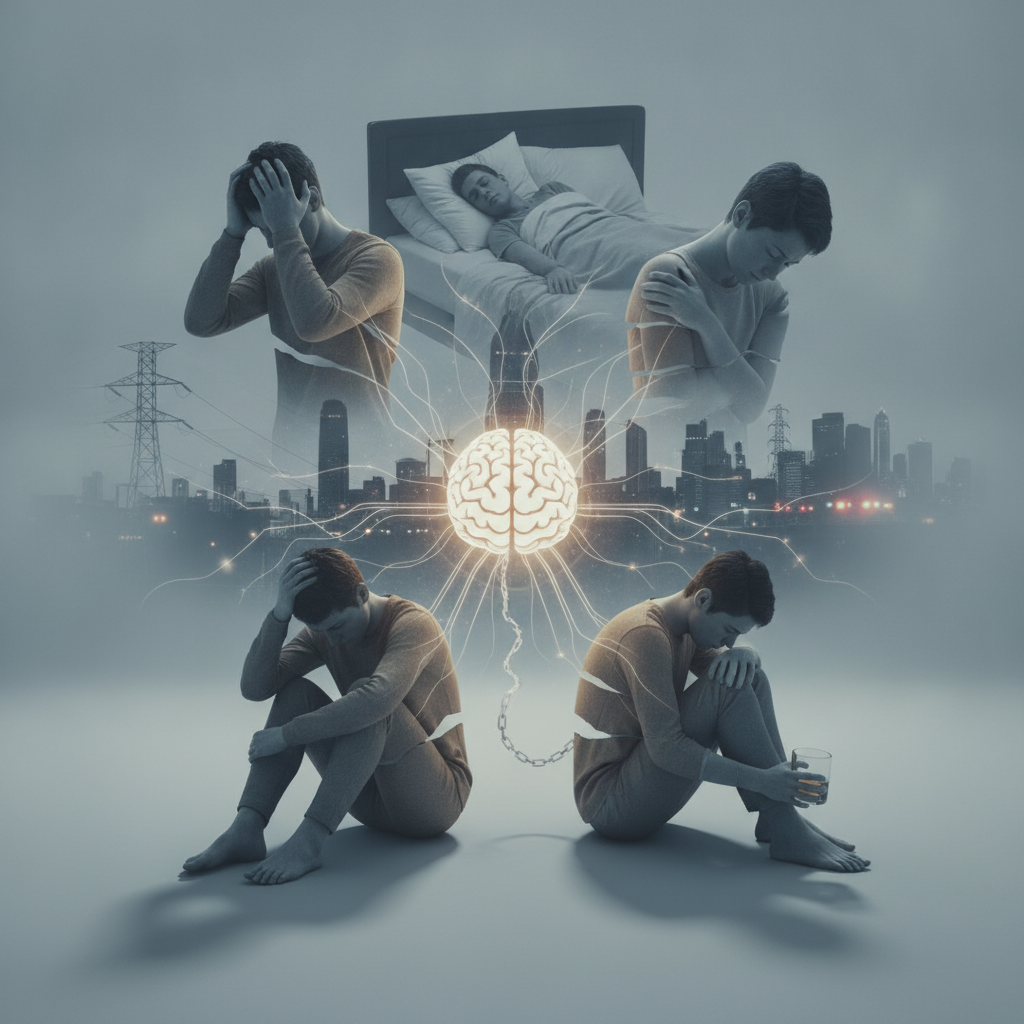
Operators rarely arrive at a clinic with a single clean problem. More often, they show up with insomnia, pain, irritability, low mood, reduced libido, memory issues, or a growing reliance on alcohol or other coping habits — and each symptom gets treated as if it exists in isolation. Kirk Hardy and Outlaw Identity argue that this pattern can obscure the real issue: a human system pushed beyond its intended capacity by years of high-consequence work.
The deeper point is not that symptom-based care is useless. It often helps. The problem is that symptom-based care can become incomplete when no one stops to ask whether the environment that produced the symptoms is still active.
The Danger Of Treating Five Problems As Five Separate People
For police officers, firefighters, EMTs, dispatchers, corrections personnel, investigators, prosecutors, and tactical teams, the work is not just stressful. It is repetitive exposure to threat, suffering, moral conflict, rapid decision-making, and responsibility for outcomes that can never be fully controlled. Over time, that creates a cumulative toll across sleep, hormones, mood, cognition, relationships, and identity.
A person in that reality may not have five unrelated conditions. They may have one overloaded system presenting through five different symptoms.
That distinction matters. If a provider treats insomnia without examining shift work, chronic hypervigilance, or trauma exposure, the sleep problem may return. If someone addresses depression without accounting for chronic pain, moral injury, or alcohol as self-medication, the emotional collapse may continue. If low testosterone is treated without understanding the larger occupational picture, the result may be partial relief instead of meaningful recovery.
This is why the conversation around operator health has to move beyond symptom management and toward pattern recognition.
The Occupational Life Leaves A Biological And Psychological Record
High-consequence jobs leave more than memories. They alter routines, strain relationships, change how the nervous system responds to normal life, and often reward suppression over recovery. An operator may learn to function well under pressure while losing the capacity to relax, sleep deeply, or feel fully present at home.
Common factors often overlap:
- Repeated trauma exposure
- Chronic sleep disruption
- Shift work and circadian strain
- Traumatic brain injury or blast exposure where applicable
- Hypervigilance and sustained stress activation
- Chronic pain and musculoskeletal wear
- Endocrine disruption
- Moral injury and cumulative disappointment
- Decision fatigue and emotional numbing
- Substance use as self-medication
- Relationship strain
- Loss of identity outside the job
- Years of inadequate recovery
None of these factors has to be present for every operator. But when several are present together, the body and mind often stop behaving like separate systems. They begin to fail as one integrated whole.
That is the core challenge for physicians, therapists, leaders, and spouses: the person sitting in front of them may not be broken in five different ways. They may be exhausted in one deeply interconnected way.
Why Frueh’s Work Matters Without Overstating It
Dr. B. Christopher Frueh’s work matters because it helped formalize a more complete way of looking at the health of military special operators. Rather than treating isolated complaints as disconnected events, Frueh and his colleagues helped describe what became known as Operator Syndrome: an interconnected pattern shaped by the operational life, repeated exposure, and cumulative strain of special operations service.
That contribution is important because it changed the question. Instead of asking only, “What symptom should be treated today?” it encourages clinicians and leaders to ask, “What kind of life produced this cluster of problems?”
That said, the concept should be used carefully. Military special operators face a specific and often extreme exposure profile. Public-safety operators and prosecutors may experience overlapping mechanisms and outcomes, but that does not mean Operator Syndrome should be casually applied across every profession or every individual. It is not a universal diagnosis, not a settled label for all service members, and not a shortcut to prescribing testosterone.
What Frueh’s work offers is a framework for seeing the whole person and the whole occupational context. That is useful far beyond any single label.
The Testosterone Debate Exposed A Larger Problem
Recent reporting from Reuters on Pentagon testosterone screening brought broader attention to how military health gets interpreted, measured, and discussed. The public debate should not be reduced to slogans or suspicion. The physicians involved should not be treated as incompetent, and the reporting itself does not need to be attacked to make the larger point.
The real critique is more fundamental: when institutions focus too narrowly on a lab value, a diagnosis code, or a single therapeutic target, they can miss the operational reality that produced the abnormality in the first place.
A low testosterone result may matter. So may insomnia, depression, fatigue, or pain. But those findings are not always the beginning of the story. In many operator populations, they are the visible edge of a much longer chain involving sleep deprivation, trauma exposure, repeated stress activation, endocrine strain, and identity erosion.
That is why the most responsible approach is not reflexive treatment of every symptom in isolation. It is integrated evaluation, better screening, and a willingness to ask what the job has done to the person over time.
The full argument is explored in Kirk Hardy and Outlaw Identity’s source article, but the larger lesson is clear: if the environment is still producing the injury, the symptom will keep returning. Real care begins when the system is examined, not just the symptom in front of it.